John Rowland
John Rowland is the central figure of Morgan Robertson's 1898 novella The Wreck of the Titan, a man whose arc from degradation to redemption drives the story's moral and emotional core. A graduate of the United States Naval Academy and a former naval officer, Rowland has fallen to the lowest rank of common sailor aboard the steamship Titan, a victim of his own alcoholism and a disastrous, unrequited love for Myra Gaunt, now Mrs. Selfridge. His journey through shipwreck, drugging, a desperate fight for survival on an iceberg, and a final confrontation with his past transforms him from a self-described "broken-down wreck" into a figure of quiet heroism and, ultimately, a man who reclaims his future.
Identity and Background
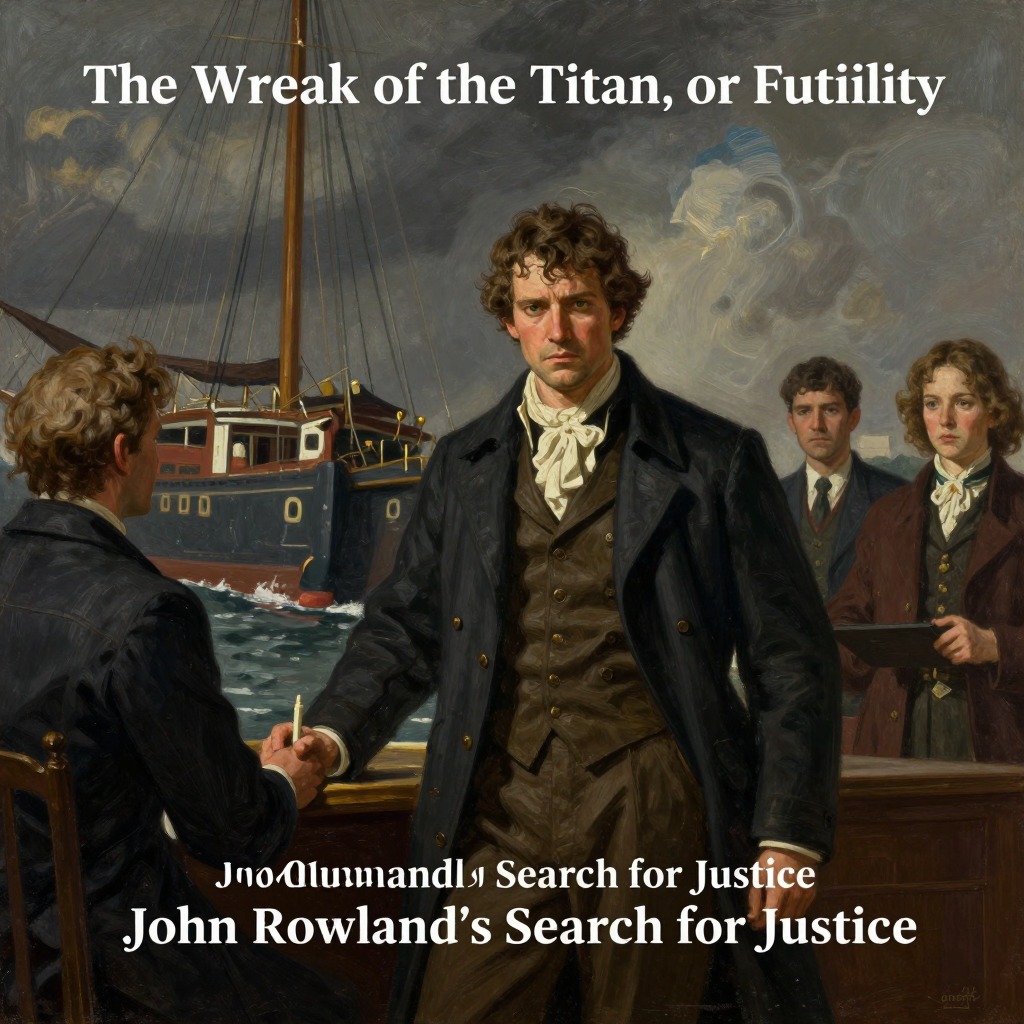
John Rowland is introduced as a slight-built man of about thirty, black-bearded and bronzed, but with watery eyes and an unsteady movement that betray his dissipated state. He is a graduate of the United States Naval Academy, a fact he later asserts to Captain Bryce as making him the captain's "equal in professional technic." His naval career ended in disgrace: he was broken for conduct unbecoming an officer after getting "roaring drunk at the President's levee." This fall from grace is directly linked to his failed romance with Myra Gaunt, whom he loved and lost. He accuses her of leading him on and then rejecting him, in part because of his atheism—he "denied the existence of God" to her, a professing Christian. Their breakup sent him into a spiral of drink and despair, and he has since worked before the mast on the Titan for three voyages, his craving for liquor consuming his wages. He is a man haunted by "the dying flutter of a starved love," and his first sight of Myra on the Titan's deck stops the blood in his veins and brings back "all the heart-hunger and helplessness."
Life and Plot Trajectory
Rowland's journey on the Titan is a sequence of escalating trials. On the first night out from New York, he is in the crow's-nest when the ship, steaming at full speed in a fog, cuts another vessel, the Royal Age, in half. He witnesses the horror and, when summoned before the captain, refuses a bribe of one hundred pounds to remain silent, declaring he will speak of this "wholesale murder." This defiance makes him a target. The captain and first officer, Mr. Austen, conspire to discredit him by drugging him with an infusion of Indian hemp (hasheesh) and placing him on the starboard bridge lookout out of his turn, where his ravings can be recorded. The drug induces terrifying hallucinations—he sees the deck fittings transform into monsters—but he is only half-drugged, having spilled part of his tea at supper. In his delirium, he is visited by the sleepwalking child Myra, who has come to him for safety. Moments later, the Titan strikes an iceberg. Rowland, holding the child, is thrown onto the ice as the ship founders and sinks. He survives on the iceberg for three days, fighting and killing a polar bear with only a knife to protect the child, an act that costs him the use of his left arm, which is later amputated. He is rescued by the bark Peerless and taken to Christiansand, Norway, where he is nursed back from the brink of death by Captain Barry.
Key Actions and Objectives
Rowland's actions are consistently driven by a moral code that emerges from his degradation. His first major act is his refusal of the captain's bribe, motivated by a desire to "do one good, strong act in my useless life" and to end the "wanton destruction of life and property for the sake of speed." On the iceberg, his objective shifts entirely to the survival of the child Myra. He wraps her in his coat, builds a shelter from wreckage, cooks bear meat, and dresses her wounds, all while suffering from a crushed arm and broken ribs. His fight with the polar bear is a desperate, selfless act: he does not hesitate, knowing the bear threatens the child. Later, in the London office of the underwriter Mr. Meyer, Rowland's objective becomes protecting the child's future. He refuses to testify against the Titan's owners, even though his testimony would expose the captain's criminal negligence and the drugging, because doing so would financially ruin the child's grandfather, Mr. Selfridge, and leave her destitute. He tells Captain Barry, "I don't want to break this child."
Relationships and Conflict
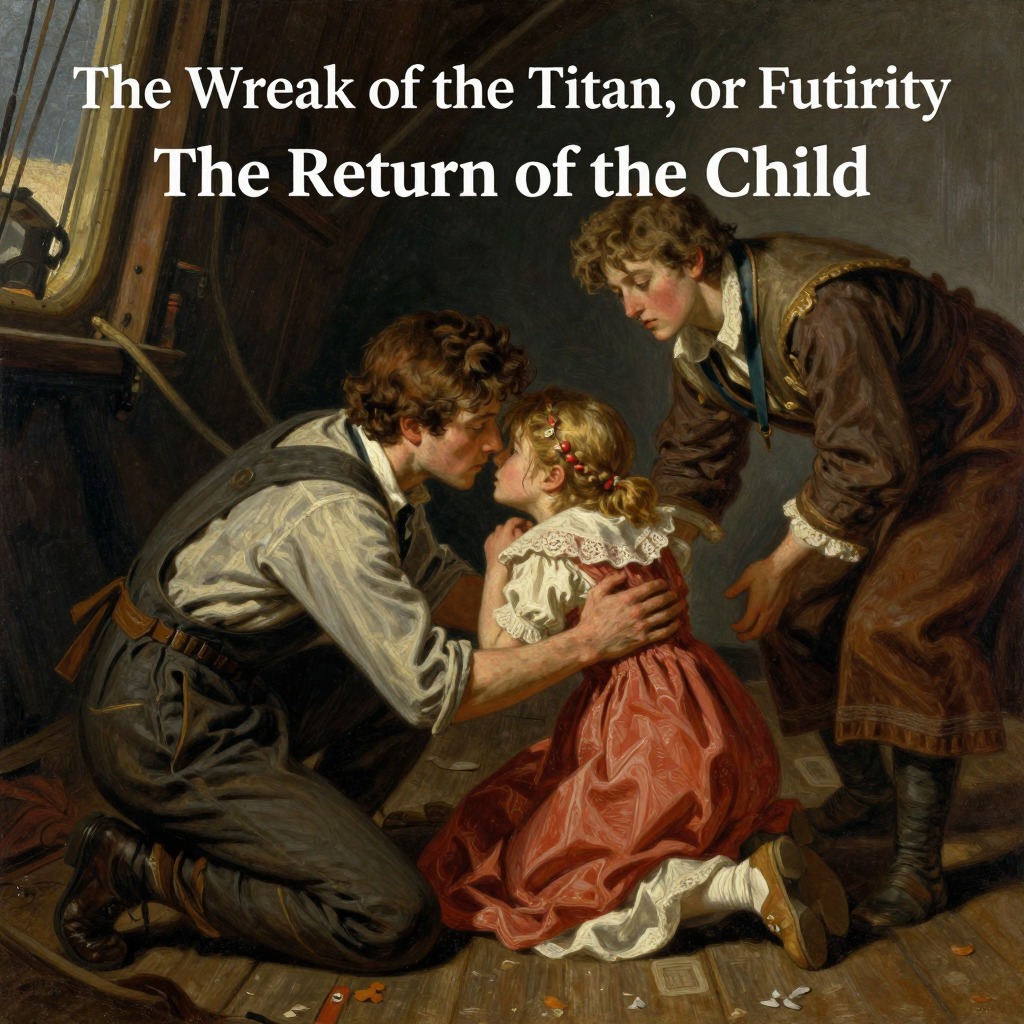
Rowland's central relationship is with the child Myra, whom he calls "Dammy," a nickname she coins. His bond with her is the catalyst for his redemption. He protects her at every cost, and she becomes the sole focus of his will to live. His relationship with her mother, Myra Selfridge, is one of unresolved, painful love. He still loves her, but she fears and misunderstands him, believing him capable of harming her child. This misunderstanding culminates in his arrest in New York for kidnapping, when Mrs. Selfridge and her father, Mr. Gaunt, see him with the child and assume the worst. His adversarial relationship with Captain Bryce and Mr. Austen is rooted in their attempt to drug and discredit him, and his later exposure of their crimes. In contrast, his friendship with Captain Barry, the master of the Peerless, is one of unwavering loyalty and support; Barry nurses him, fights for him, and offers him a mate's berth. The conflict with Mr. Meyer, the underwriter, is a battle of wills over the insurance money, which Rowland ultimately wins by refusing to testify, choosing the child's welfare over revenge.
Change and Ending
Rowland's transformation is both physical and spiritual. He begins as a trembling, alcoholic sailor, a "hang-dog ruffian" in the eyes of others. After the shipwreck, he is crippled, losing his arm, and endures days of fever and delirium. Yet he emerges with a new resolve. He quits drinking, telling Captain Barry, "Never again. I've a future now, as well as a past." In New York, after being arrested and then discharged by a magistrate who recognizes him as the man from the iceberg, he rebuilds his life from nothing. He starts by fishing with a knotted string and an old hook, sleeping under the docks. He works as a stevedore, then as an envelope addresser, and eventually passes a Civil Service examination and secures a lucrative government position. He declares, "Now John Rowland, your future is your own. You have merely suffered in the past from a mistaken estimate of the importance of women and whisky." But the story ends with him receiving a letter from Mrs. Selfridge, who asks him to come and see Myra, who cries for him. He goes. The final line, "And the man went to see --- Myra," leaves his future open, but suggests that his redemption is not complete in isolation; it is fulfilled through the human connection he has fought to preserve.
Narrative Role and Evaluation
Rowland functions as both the moral center and the suffering hero of the novella. His perspective, though narrated in the third person, is the lens through which the reader experiences the shipwreck, the drugging, and the struggle on the ice. His atheism and his later, desperate prayer on the iceberg—"For you, Myra"—frame the book's central theological debate. He is a figure of immense resilience, capable of both profound degradation and extraordinary self-sacrifice. His arc from a man who believes in nothing but "cause and effect" and "the survival of the fittest" to a man who prays for another's life and then gives up his own chance for revenge to protect a child, constitutes the novella's most powerful statement about human worth and redemption. He is, in the end, not merely a survivor, but a man who has earned his own future.